Navigating the Loot online casino ecosystem requires more than just an eye for games; it demands a technical understanding of its financial structures, security protocols, and operational logic. This whitepaper serves as an exhaustive manual, dissecting the platform from first principles to advanced strategy, ensuring you can engage with the loot casino framework both profitably and safely.
Before You Start: The Pre-Engagement Checklist
This critical pre-flight check prevents common pitfalls and sets the foundation for a secure experience. Do not proceed until you can confirm all points.
- Jurisdiction Verification: Confirm your country of residence is not listed in the restricted territories on Loot Casino’s Terms & Conditions page.
- Documentation Readiness: Have clear, high-resolution scans of a government-issued ID (passport, driver’s license) and a recent utility bill or bank statement (less than 3 months old) for KYC.
- Payment Method Alignment: Ensure your chosen deposit method (e.g., e-wallet, card) is the same one you intend to use for withdrawals, as this streamlines the cash-out audit.
- Bonus Term Sheet Analysis: Locate and download the full Bonus Terms and Conditions. Your strategy depends on this document.
- Connection Security: Verify the site uses a valid TLS 1.2+ (HTTPS) connection. Never attempt a loot casino login on public, unsecured Wi-Fi without a VPN.
Registration Protocol & Identity Graph Construction
The sign-up process is the initial data handshake between you and the casino’s security system. Accuracy is paramount for future verification.
- Initiation: Click the “Sign Up” or “Register” button, typically in the top-right corner of the homepage.
- Data Layer 1 – Core Identity: Enter your full legal name (as per ID), date of birth, country, and valid email address. System cross-checks this against age and jurisdiction databases in real-time.
- Data Layer 2 – Access Credentials: Create a unique username and a strong password (12+ characters, mix of cases, numbers, symbols). This forms your primary loot casino login key.
- Data Layer 3 – Contact & Currency: Provide your active phone number and select your base currency (e.g., USD, EUR, CAD). Warning: Currency selection is almost always permanent.
- Contractual Agreement & Finalization: Agree to the Terms of Service, Privacy Policy, and confirm you are of legal age. Click the verification link sent to your email to activate the account.
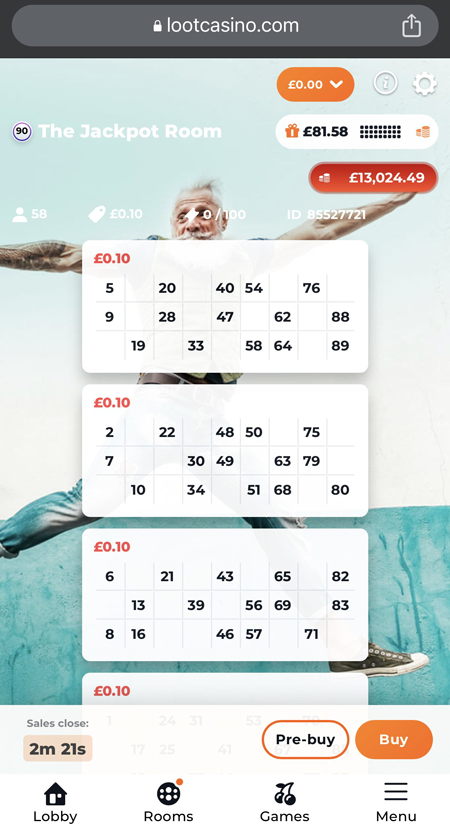
Bonus Mathematics: Deconstructing Wagering Requirements
This is the core of casino finance. A bonus is not “free money” but a conditional liability. Here’s how to model it.
The Fundamental Equation:
Total Required Turnover = (Bonus Amount) × (Wagering Multiplier)
Scenario Analysis: Assume you deposit $50 and claim a 100% match bonus ($50) with a 40x wagering requirement on the bonus amount only.
- Total Bonus: $50
- Wagering Requirement: 40x
- Total Turnover Needed: $50 × 40 = $2,000
Expected Value (EV) Calculation: To determine if this is viable, factor in the game’s Return to Player (RTP). If you play a slot with 96% RTP, the house edge is 4%.
- Expected Loss on Turnover: $2,000 × 0.04 = $80.
- Net Position: You have $100 (deposit + bonus) to wager. An expected loss of $80 means your theoretical ending balance is $20. The bonus, in this harsh scenario, merely extended your playtime but did not create positive EV.
Key Variables: Always check: 1) What amount is wagered (Bonus only? Bonus+Deposit?), 2) Game contribution percentages (Slots often 100%, table games 5-10%), 3) Maximum bet limit during wagering (e.g., $5).
| Category | Specification | Technical Implication |
|---|---|---|
| Licensing Authority | Curacao eGaming | Standard international license; dispute resolution governed by Curacao law. |
| Software Providers | NetEnt, Pragmatic Play, Yggdrasil, etc. | Games utilize certified RNGs; fairness audits are provider-dependent. |
| Withdrawal Processing Time | 0-24 hours (e-wallets), 1-5 days (Bank/Card) | Internal security audit (“pending” period) precedes processing. |
| Minimum Withdrawal | $20 | Low threshold facilitates frequent cash-out testing. |
| Account Verification (KYC) | Mandatory before first withdrawal | Triggers upon withdrawal request; delays possible if docs are insufficient. |
Banking Layer: Deposit & Withdrawal Architecture
The cash flow pipeline is where theory meets practice. Understand the protocols.
- Deposit (Credit Injection): Instant processing. Methods include Credit/Debit Cards (Visa/MC), E-Wallets (Skrill, Neteller), and Cryptocurrencies. Minimum deposits are typically $10-$20. Funds are immediately available for play.
- Withdrawal (Debit Extraction): A multi-stage process.
- Request: User initiates request from cashier. All active bonuses must be completed or forfeited.
- Internal Audit (Pending): The casino’s finance team verifies gameplay meets wagering, checks for duplicate accounts, and ensures no Terms breaches.
- KYC Trigger: If not previously done, you will be prompted to upload documents.
- Processing & Transmission: Once approved, funds are sent via your chosen method. E-wallets are fastest (0-24h); bank transfers slowest (3-7 business days).
Security & Fairness: A Systems Audit
Assessing the platform’s integrity is non-negotiable.
- Data Encryption: The site should use 256-bit SSL encryption (look for the padlock icon in the address bar). This encrypts all data transfers, including your loot casino login credentials and financial details.
- Game Integrity: Independent testing agencies (e.g., iTech Labs, eCOGRA) audit the RNG of games from major providers. Look for certificates on individual game info pages.
- Account Security: Enable Two-Factor Authentication (2FA) if offered. This adds a time-based one-time password (TOTP) to your login process, making account takeover significantly harder.
Technical Troubleshooting: Common Failure Modes
Diagnosing and resolving access and transaction errors.
- “Invalid Credentials” on Loot Casino Login:
- Check Caps Lock/Num Lock.
- Use the “Forgot Password” function to reset. The new password must differ from recent previous passwords.
- Clear browser cache/cookies or try a different browser (Chrome, Firefox).
- Disable browser extensions (especially ad-blockers) that may interfere with session cookies.
- Deposit Declined:
- Contact your bank/payment provider to ensure the transaction isn’t being blocked as “gambling.”
- Verify you have not exceeded your card’s daily/monthly online spending limit.
- Ensure the billing address entered matches the one on file with your bank exactly.
- Game Won’t Load:
- Ensure Adobe Flash is not required (modern games use HTML5).
- Update your browser and graphics drivers.
- Check your internet connection stability; use a wired connection if possible.
Extended FAQ: Technical & Operational Queries
Q1: What exactly happens during the KYC process at Loot Casino?
A: The system performs a “Proof of Identity” (POI) and “Proof of Address” (POA) check. Your ID scan is verified for authenticity and matched against your registered name/DOB. The utility bill confirms your residency. Third-party verification services may be used to cross-reference public databases.
Q2: How are wagering requirements tracked in real-time?
A: The casino’s backend maintains a “bonus wallet” separate from your cash balance. Every eligible wager deducts from the required turnover. You can monitor this progress in the “Bonuses” or “Cashier” section of your account.
Q3: Can I use a VPN to access Loot online casino from a restricted country?
A: No. This is a direct violation of Terms. The casino’s geolocation tools will detect the VPN/IP mismatch during login or withdrawal, leading to immediate account closure and confiscation of all funds.
Q4: What is the “Maximum Bet Rule” under bonus terms?
A> This is a risk-management rule, often capping bets at $5 while wagering. Exceeding it allows the casino to void the bonus and any winnings derived from it, as it’s considered a strategy to circumvent wagering requirements.
Q5: Why is my withdrawal “pending” for so long?
A> The “pending” state is the manual/automated audit phase. Delays are commonly due to: 1) KYC documents under review, 2) Suspected bonus abuse patterns being investigated, 3) Weekend/holiday non-processing days.
Q6: Is my data safe with Loot Casino?
A> Under Curacao license, they are required to implement data protection measures (encryption). However, you should review their Privacy Policy to understand data retention periods and if data is shared with third-party marketing partners.
Q7: What’s the difference between “cashable” and “non-cashable” bonus funds?
A> Cashable bonuses become your real money once wagering is met. Non-cashable (or “sticky”) bonuses are used to generate winnings but are subtracted from the total amount before a withdrawal is calculated. Always prefer cashable bonuses.
Q8: How do I calculate the actual cost of a bonus if I fail to meet wagering?
A> If you forfeit a bonus, you typically only lose the bonus funds. Your original deposit (minus any losses from play with your deposit money) remains. The “cost” is the opportunity cost of the bonus winnings you did not achieve.
Q9: Can I have multiple accounts at Loot Casino?
A> Strictly prohibited. The system uses digital fingerprints (IP, device ID, banking details) to detect duplicates. Penalties include the closure of all accounts and forfeiture of all funds.
Q10: What is RTP and how does it affect my long-term play?
A> Return to Player (RTP) is the theoretical percentage of all wagered money a game will pay back to players over time. A 96% RTP implies a 4% house edge. It is a long-term statistical average, not a short-term guarantee.
Conclusion
Engaging with Loot Casino effectively requires a hybrid mindset: part gambler, part financial analyst, part systems auditor. By internalizing the mathematical models governing bonuses, understanding the security and verification protocols, and methodically following operational procedures, you transform from a casual user into an informed participant. This guide provides the schematic; your disciplined application of its principles determines the outcome. Always prioritize responsible play, treating any monetary engagement as an expense for entertainment, not an investment.